
If you’ve recently come across the domain MappingEducation com and found yourself curious about what it offers, you’re not alone in seeking more information. This website has been appearing in search results and generating interest online, prompting users to search for details about its purpose, legitimacy, and overall trustworthiness. With limited publicly available background information and no well-established reputation in the education or technology sectors, it’s completely natural for visitors to approach this platform with questions and a healthy degree of caution.
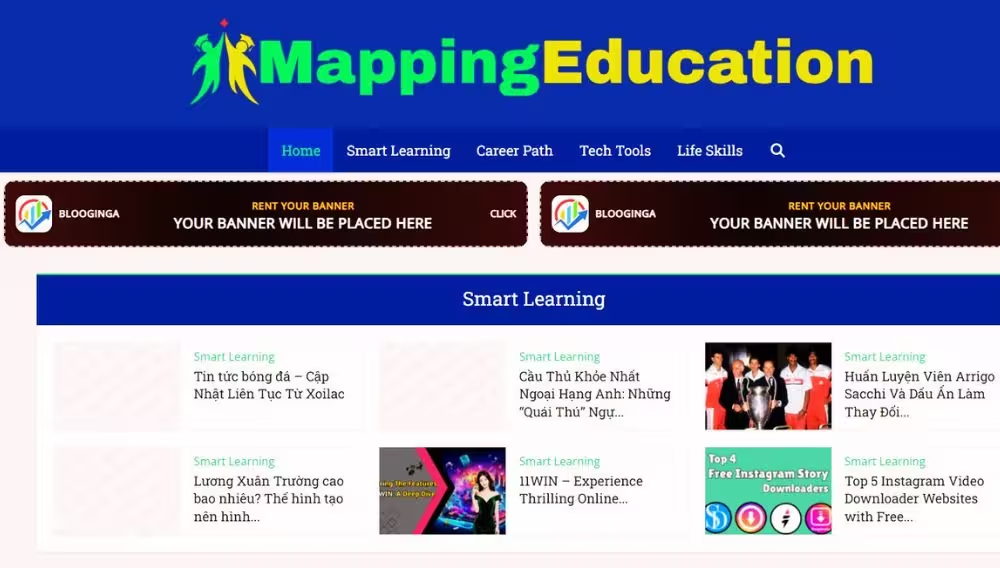
In this comprehensive guide, we’ll explore what MappingEducation com is, examine the type of content, products, or services it appears to provide, discuss important safety and trust considerations, and help you determine whether this platform deserves your time and attention. Our goal is to deliver clear, honest, and beginner-friendly information that empowers you to make informed decisions about engaging with this website.
What Is MappingEducation com?
MappingEducation com appears to be an education-focused platform that likely RoiDoor provides educational resources, mapping tools for education, educational technology solutions, learning materials, or services related to educational planning and navigation. Based on its domain name and apparent positioning, the website seems designed to help educators, students, educational administrators, or learners access resources, tools, or information related to educational mapping in some capacity.
The term “mapping” in educational contexts can have multiple meanings. It could refer to curriculum mapping (organizing and planning educational content and learning objectives), educational pathways mapping (helping students plan academic and career routes), geographic or visual learning tools, mind mapping for educational purposes, mapping educational resources or institutions, or data visualization for educational outcomes and planning.
The platform appears aimed at educators seeking curriculum development tools, students planning educational pathways, educational administrators managing programs, parents helping children navigate educational options, or educational technology enthusiasts interested in innovative learning tools and resources. The specific target audience depends heavily on what type of educational mapping the platform actually provides.
The website may function as a software-as-a-service platform offering educational tools, a resource repository for educational materials, a directory of educational institutions or programs, an educational planning service, or an information hub about educational mapping methodologies and best practices.
Services and Content Offered
MappingEducation com focuses on delivering education-related services or content, though the specific offerings could vary significantly based on the platform’s actual focus. Educational mapping platforms typically provide several types of services and resources.
Curriculum Mapping Tools:
If focused on curriculum development, the platform might offer tools for educators to map curricula, align learning objectives with standards, organize course content and sequencing, track skill development across grade levels, coordinate between different subject areas, and document educational programs comprehensively. Curriculum mapping helps schools ensure coherent, well-structured educational experiences.
Educational Pathway Planning:
The website could provide tools helping students and families navigate educational options including college and career pathway planning, course selection guidance, prerequisite tracking, degree requirement mapping, certification and credential pathways, or academic planning from K-12 through higher education.
Educational Resource Mapping:
The platform might function as a directory or mapping system for educational resources such as schools and institutions by location or specialty, educational programs and courses, learning materials and curriculum resources, educational technology tools, or tutoring and support services. Geographic mapping helps users find nearby educational options.
Visual Learning and Mind Mapping:
If focused on learning methodologies, the platform could offer mind mapping tools for visual learning, concept mapping for understanding relationships between ideas, graphic organizers for educational purposes, or visual planning tools for students and educators.
Educational Data and Analytics:
The website might provide data visualization and mapping related to educational outcomes, performance metrics, demographic information, resource allocation, or comparative analysis of educational institutions and programs.
Professional Development:
The platform could offer training, resources, or certification programs for educators learning about curriculum mapping, educational technology implementation, or instructional design methodologies.
Content and Guides:
Educational articles, how-to guides, best practices documentation, case studies, or informational resources about educational mapping concepts and applications might be provided to help users understand and implement various mapping approaches.
Why People Are Searching for MappingEducation com
Several factors explain why internet users are actively searching for information about MappingEducation com. Understanding these motivations provides important context for the current interest surrounding this platform.
Tool and Resource Discovery:
Educators, administrators, and educational technology professionals searching for curriculum mapping tools, educational planning resources, or learning management solutions may encounter MappingEducation com and want to learn more about its offerings, capabilities, and suitability for their needs.
Legitimacy and Quality Verification:
Users who discover the website want to verify its legitimacy, assess content quality, understand who operates the platform, and determine whether it provides credible, useful educational resources before investing time or potentially money in using the service.
Feature and Capability Research:
People evaluating educational technology tools or planning resources search for information about specific features, user experiences, pricing, integration capabilities, and how MappingEducation com compares to alternative platforms or established educational technology solutions.
Academic and Professional Requirements:
Students, teachers, or administrators may have been directed to MappingEducation com by institutions, colleagues, or educational programs and want to understand what it is, why they should use it, and whether it’s a reputable platform before engaging.
Privacy and Data Security Concerns:
Educational platforms handle sensitive information about students, including minors, making privacy and data security critical concerns. Users search to understand how MappingEducation com protects data, complies with educational privacy regulations like FERPA or COPPA, and handles student information responsibly.
Cost and Value Assessment:
Educators and institutions operating with limited budgets want to understand pricing structures, whether free alternatives exist, what value the platform provides, and whether investing in MappingEducation com represents worthwhile allocation of educational resources.
User Experience and Reviews:
People want to know what actual users think about MappingEducation com—whether it’s easy to use, reliable, helpful, well-supported, and worth recommending to colleagues or students in educational settings.
Alternative Platform Comparison:
Users familiar with established educational mapping or planning tools want to know how MappingEducation com compares to alternatives, what unique features it offers, and whether switching from current tools would be beneficial.
Transparency and Trust Factors
Transparency serves as an absolutely critical foundation for trust when evaluating any educational platform, especially those that may handle student data, serve minors, or integrate into educational institutions. At this stage, MappingEducation com appears to have limited publicly available transparency elements that would help establish credibility and compliance with educational standards.
Organizational Information:
Information about the website’s ownership, organizational structure, company registration, founding team, educational credentials of creators, or the people behind the operation may not be prominently featured, easily discoverable, or available at all. Reputable educational platforms typically provide clear organizational information, founder backgrounds, and transparent leadership to build trust with educators and institutions.
Educational Credentials and Expertise:
Understanding whether MappingEducation com is developed by educators, educational technology professionals, instructional designers, or others with relevant expertise is essential for assessing whether the platform truly understands educational needs and best practices. Credible educational platforms highlight their team’s qualifications and educational backgrounds.
Privacy and Data Protection Compliance:
Educational platforms must comply with strict privacy regulations including FERPA (Family Educational Rights and Privacy Act) in the United States, COPPA (Children’s Online Privacy Protection Act) for platforms serving children under 13, GDPR for European users, and state-specific student privacy laws. Clear privacy policies, data protection certifications, and compliance documentation should be prominently available.
If MappingEducation com serves K-12 students or collects student data, compliance with these regulations is not optional—it’s legally required. The absence of clear privacy policies or compliance statements is extremely concerning for educational platforms.
Terms of Service and Usage Policies:
Clear terms of service explaining user rights, platform responsibilities, acceptable use policies, data ownership, content licensing, and service limitations should be easily accessible. Educational platforms need transparent terms that protect both users and institutions.
Security Measures:
Information about how the platform protects data, prevents unauthorized access, secures student information, encrypts transmissions, and maintains system security should be clearly documented. Educational institutions need assurance that platforms handling student data employ robust security measures.
Pricing and Business Model Transparency:
Understanding how MappingEducation com generates revenue—whether through subscriptions, institutional licenses, freemium models, advertising, or other means—helps assess potential conflicts of interest, sustainability, and whether business incentives align with educational quality.
Contact Information and Support:
Reputable educational platforms provide comprehensive contact information including customer support for educators, technical support, sales contacts for institutions, and responsive channels for addressing concerns or questions.
Educational Partnerships and Recognition:
Partnerships with schools, districts, educational organizations, endorsements from educators, or recognition from educational technology communities help establish credibility and demonstrate acceptance within professional education circles.
Is MappingEducation com Safe to Use?
When evaluating the safety of MappingEducation com, multiple dimensions of safety require careful consideration, especially given the educational context and potential involvement of student data or minors. Safety concerns include data privacy, child safety, information security, and educational appropriateness.
Student Data Privacy Concerns:
The most critical safety consideration for any educational platform involves protecting student privacy and complying with educational privacy laws. If MappingEducation com collects, stores, or processes any student information—including names, grades, progress data, or educational records—it must comply with applicable privacy regulations.
Users should avoid providing student data, creating student accounts, or uploading educational records until they have thoroughly verified that the platform has clear privacy policies, demonstrates FERPA compliance (or equivalent), provides data protection assurances, uses secure encryption for data transmission and storage, and has appropriate safeguards for student information.
Child Safety Protections:
If the platform serves students under 13, COPPA compliance is legally required in the United States. This includes obtaining verifiable parental consent, limiting data collection to what’s necessary, providing parents access to children’s data, and maintaining strict security. Platforms serving minors must demonstrate robust child protection measures.
Educators and parents should never allow children to use educational platforms that lack clear child safety policies, age-appropriate content filters, appropriate privacy protections, or transparent data handling practices.
Account Creation and Personal Information:
Be extremely cautious about creating accounts or providing personal information including educator credentials, school affiliations, student information, email addresses, or professional details until you’ve verified the platform’s legitimacy, privacy practices, and data security measures.
If the platform is used in institutional settings, ensure IT departments and administrators have reviewed and approved it for data security and privacy compliance before allowing widespread use with student data.
Payment and Financial Information:
If MappingEducation com offers paid services or subscriptions, verify security before providing payment information. Educational institutions should use proper procurement processes rather than individual educators providing personal payment details. Never share financial information with educational platforms that lack clear legitimacy and security credentials.
Third-Party Integrations:
If the platform integrates with learning management systems, student information systems, or other educational tools, understand what data is shared, how it’s protected, and whether integrations have been properly vetted for security. Unverified integrations can create security vulnerabilities.
Content Appropriateness:
For platforms providing educational content or resources, verify that materials are age-appropriate, educationally sound, accurate, and aligned with educational standards. Questionable platforms might provide low-quality or inappropriate content.
Safe Usage Practices:
If educators decide to explore MappingEducation com, essential safety practices include:
- Never upload actual student data during testing or evaluation phases
- Use dummy data or anonymized information for testing functionality
- Verify privacy policies and terms of service thoroughly
- Check for FERPA, COPPA, or other relevant compliance statements
- Ensure district or institutional IT approval before institutional deployment
- Maintain independent backups of any important data
- Use strong, unique passwords for any accounts created
- Limit permissions and access to minimum necessary levels
- Monitor for any unusual activity or data requests
- Be prepared to export data and discontinue use if concerns arise
Recommended Approach:
The safest approach for educational platforms is to:
- Verify the platform has clear privacy policies compliant with educational regulations
- Confirm organizational legitimacy and educational credentials
- Check for reviews from other educators or institutions
- Obtain institutional approval before use with real student data
- Test with non-sensitive data before broader implementation
- Use only platforms with established reputations when handling sensitive student information
For critical educational functions involving student data, prioritize established platforms with proven track records of privacy compliance, security, and educational effectiveness.
Benefits of MappingEducation com
Despite the concerns and uncertainties surrounding this platform without verified information, MappingEducation com may offer several potential benefits if it operates as a legitimate, quality educational resource, though these remain largely theoretical without confirmed user experiences.
Educational Organization and Planning:
If the platform provides effective curriculum mapping or educational planning tools, it could help educators organize instruction more coherently, align curricula with standards, plan educational pathways effectively, visualize learning progressions, and coordinate across grade levels or subject areas.
Resource Accessibility:
The platform might consolidate educational resources, tools, or information in one convenient location, potentially saving educators time searching multiple sources and providing students with centralized access to planning and learning resources.
Visual Learning Support:
If offering mind mapping or visual organization tools, the platform could support visual learners, help students organize complex information, facilitate brainstorming and creative thinking, and provide alternative approaches to traditional note-taking or study methods.
Professional Development:
The website might offer valuable information, training, or resources helping educators learn about curriculum mapping methodologies, instructional design principles, or educational technology implementation strategies.
Innovative Approaches:
A newer platform might bring fresh perspectives, modern interfaces, innovative features, or different approaches to educational mapping that distinguish it from older, more established alternatives.
Cost Effectiveness:
If offering free or affordable options, the platform could provide value to under-resourced schools, individual educators, or students who cannot afford premium educational technology solutions.
Specialized Focus:
Dedicated focus on educational mapping might result in more specialized, thoughtful features than general-purpose educational technology platforms that address mapping as one of many capabilities.
However, all these potential benefits remain speculative without verified user experiences, proven educational effectiveness, and demonstrated value through actual usage by satisfied educators and students.
Limitations of MappingEducation com
MappingEducation com faces numerous significant limitations that affect how confidently educators, students, and institutions can rely on the platform for educational purposes.
Lack of Established Reputation:
As a newer or less established platform, MappingEducation com lacks the proven reputation and extensive track record that comes with years of successful implementation in educational settings, satisfied educator testimonials, and demonstrated positive impact on teaching and learning.
Limited Operational History:
The limited operational history makes it impossible to assess the platform’s long-term reliability, commitment to educational privacy standards, feature development trajectory, responsiveness to educator feedback, or dedication to maintaining service quality over time.
Transparency Deficits:
Clear information about the platform’s ownership, educational expertise of developers, privacy compliance, data security measures, and operational standards appears lacking. Understanding who operates educational tools and how they protect student data is essential for institutional trust.
Absence of User Reviews:
User reviews, educator testimonials, case studies from schools or districts, and independent evaluations are essentially nonexistent or extremely limited for MappingEducation com. Established educational platforms accumulate substantial feedback that helps new users gauge effectiveness, usability, and value.
Privacy Compliance Uncertainty:
Whether MappingEducation com complies with FERPA, COPPA, GDPR, or other educational privacy regulations cannot be verified without clear compliance documentation. Educational platforms must demonstrate privacy compliance, not simply claim it.
Educational Effectiveness Questions:
Whether the platform actually improves educational outcomes, supports effective teaching, enhances student learning, or provides meaningful value beyond basic features remains unverified without research, case studies, or documented success stories.
Integration Capabilities:
Compatibility with existing learning management systems, student information systems, educational technology ecosystems, or institutional IT infrastructure may be unclear or limited, creating implementation challenges for schools and districts.
Support and Training:
Quality of customer support, availability of training resources, responsiveness to technical issues, professional development offerings, and implementation assistance cannot be verified without user experiences and established support infrastructure.
Competitive Disadvantages:
Without proven advantages in features, educational effectiveness, ease of use, pricing, or support compared to established educational mapping tools, curriculum platforms, or planning resources, MappingEducation com lacks compelling reasons for educators to choose it over trusted alternatives.
Sustainability Concerns:
The platform’s long-term viability, financial sustainability, commitment to continued operation and development, and plans for maintaining and improving service remain completely uncertain. Educational institutions need platforms they can rely on for years.
Data Portability and Ownership:
Ability to export data, migrate to other platforms if needed, maintain ownership of educational content created, or avoid vendor lock-in may not be clearly guaranteed, creating risks if the platform proves unsatisfactory or ceases operations.
Age-Appropriateness and Accessibility:
Whether the platform is suitable for different grade levels, accessible to students with disabilities, multilingual, or designed with diverse learner needs in mind cannot be verified without clear documentation and user feedback.
Final Verdict
MappingEducation com represents an emerging platform in the educational technology space that may potentially offer value to educators, students, and educational institutions if it operates as a legitimate, effective, and privacy-compliant educational resource. However, the current lack of established reputation, limited transparency about privacy compliance and security, absence of verified user reviews, and uncertainty about educational effectiveness make it impossible to confidently recommend the platform for educational use, especially involving student data, at this time.
For educators, schools, and families requiring reliable educational tools, curriculum mapping resources, or student planning platforms, the substantial risks associated with using unproven platforms—including potential privacy violations, data security vulnerabilities, compliance issues, and uncertain educational value—strongly suggest choosing established, reputable alternatives with proven track records in educational settings.
If you’re interested in educational mapping tools and encounter MappingEducation com during your research, you can explore what it offers through their website or marketing materials, but we strongly recommend avoiding use with actual student data, real educational records, or institutional deployment until the platform has clearly demonstrated legitimacy, privacy compliance, security, educational effectiveness, and value through multiple verifiable indicators.
For educational technology needs where student privacy, data security, educational effectiveness, and institutional compliance truly matter, rely on established educational platforms with proven track records, transparent privacy practices, demonstrated FERPA and COPPA compliance, comprehensive security measures, strong educator support, and documented success in educational settings.
Excellent established alternatives for various educational mapping needs include curriculum mapping platforms like Atlas Rubicon, Curriculum Trak, or UbD Exchange; educational planning tools provided by colleges and universities; learning management systems with built-in planning features like Canvas, Blackboard, or Google Classroom; mind mapping tools like MindMeister or Coggle; and comprehensive student information systems with planning modules.
Many established educational technology platforms offer free versions for individual educators, affordable pricing for schools and districts, comprehensive privacy compliance documentation, proven integration with educational systems, and extensive support and training resources that make professional educational tools accessible without risking student privacy or data security.
Before adopting any educational technology, especially platforms handling student data, conduct thorough due diligence including verifying privacy policy compliance with educational regulations, confirming data security measures and encryption, reading reviews from other educators and institutions, testing functionality with non-sensitive data first, obtaining institutional IT and administrative approval, understanding pricing and contractual terms completely, and ensuring the platform meets specific educational needs and standards.
The risks associated with MappingEducation com—including unverified privacy practices, unclear security measures, limited transparency, absence of proven educational effectiveness, and uncertain long-term viability—substantially outweigh any potential benefits of trying a newer, unproven platform when numerous trusted educational technology alternatives exist.
Protecting student privacy, maintaining data security, ensuring educational quality, and complying with regulatory requirements should always take absolute priority over experimenting with questionable platforms or seeking marginally lower costs. Choose educational technology that has clearly earned trust through transparent operations, proven compliance, demonstrated educational value, and commitment to serving student and educator needs responsibly.
Frequently Asked Questions
What is MappingEducation com?
MappingEducation com appears to be an education-focused platform potentially offering curriculum mapping tools, educational planning resources, or learning materials. However, limited information is available about its specific features, educational credentials, privacy compliance, or proven track record in educational settings.
Is MappingEducation com safe for student data?
The safety of MappingEducation com for student data cannot be verified without clear privacy policies, documented FERPA and COPPA compliance, demonstrated security measures, and transparent data protection practices. For student data, use only platforms with proven privacy compliance and security credentials.
Is MappingEducation com FERPA compliant?
FERPA compliance for MappingEducation com is not clearly documented or verifiable. Educational platforms handling student records must demonstrate FERPA compliance through clear policies and practices. Verify compliance documentation before using any platform with student educational records.
Who owns and operates MappingEducation com?
Ownership information, organizational credentials, educational expertise of founders, and operational details for MappingEducation com are not clearly available or transparent. Understanding who operates educational platforms and their qualifications is essential for trust and accountability in educational technology.
Read Also : techpora: What It Is and How It Helps?